
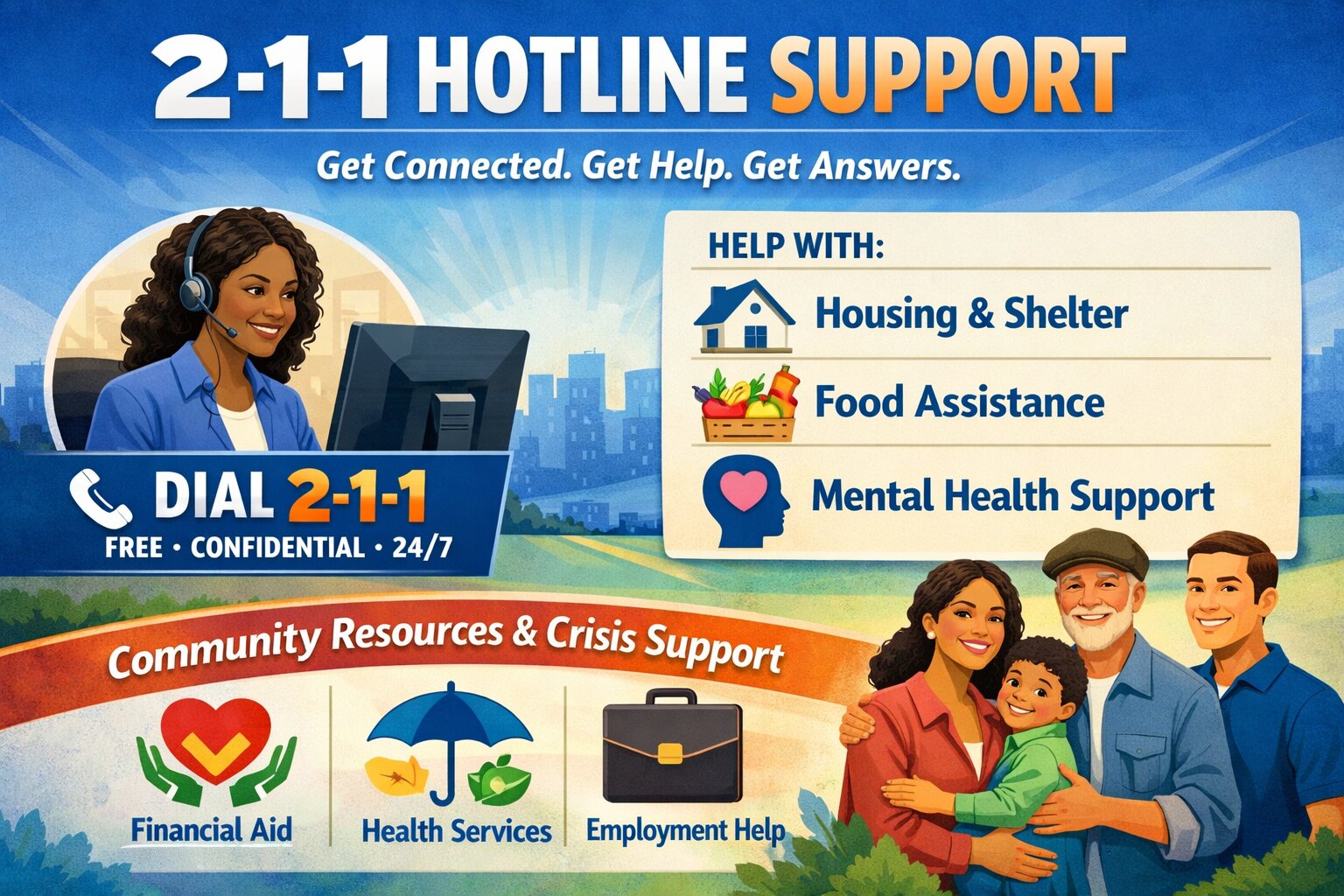
If there is one free resource that comes up more consistently than almost anything else when people are navigating financial hardship, housing instability, food insecurity, healthcare access, or any other basic needs crisis, it is 211. Despite being available in every state and covering more types of assistance than most people realize, 211 remains one of the most underused resources in the entire social services landscape. Most people who would benefit from calling have either never heard of it or have a vague impression that it is a hotline for a specific type of problem rather than a comprehensive navigation service for almost any kind of need. This guide covers exactly what 211 does, what it does not do, and how to use it in a way that gets you the most useful information as quickly as possible.
What 211 Actually Is
211 is a three-digit phone number, similar in concept to 911 for emergencies or 311 for local government services, that connects callers with a trained specialist who helps identify local resources for health and human services needs. It is operated through a network of regional call centers across the United States and is coordinated nationally by United Way Worldwide in partnership with 211.org.
The specialists who answer 211 calls are not volunteers with a printed resource list. They are trained information and referral specialists with access to comprehensive, regularly updated databases of local programs and services. When you call 211 and describe your situation, the specialist searches that database for programs in your specific geographic area that match your need, confirms current availability and funding status where possible, and provides you with contact information, eligibility summaries, and application guidance.
211 is available by phone 24 hours a day, seven days a week in most areas. Many 211 systems also offer text access by texting your zip code to 898-211, online search through the 211.org website, and chat access through the website in some regions. Language interpretation services are available through most 211 call centers for callers who do not speak English as their primary language, which makes the service accessible to a broader population than most people realize.
What 211 Covers
The scope of what 211 covers is broader than most people expect. The service is specifically designed to be a single entry point for the full range of health and human services needs rather than a referral service for one specific type of problem.
Basic needs assistance including food pantries, food banks, meal delivery programs, SNAP enrollment assistance, and WIC referrals are among the most common reasons people call 211. A specialist can identify every food assistance option currently operating in your zip code and tell you which ones require appointments, which accept walk-ins, and what documentation they need.
Housing and utility assistance including emergency rental assistance, security deposit help, eviction prevention programs, LIHEAP energy assistance, and weatherization program referrals are consistently among the top categories of 211 inquiries. The housing assistance landscape changes frequently as programs open, close, exhaust funding, and reopen, and the 211 database is updated more regularly than most static online directories.
Healthcare access including help enrolling in Medicaid, CHIP, and ACA Marketplace plans, referrals to federally qualified health centers, sliding-scale dental and vision clinics, free mental health services, prescription assistance programs, and community health worker programs are all within the scope of what 211 covers.
Employment and income support including unemployment insurance enrollment assistance, workforce development programs, job training referrals, TANF enrollment, and earned income tax credit filing assistance are categories where 211 specialists can identify specific local resources that are not easily found through general internet searches.
Crisis intervention and support services including domestic violence hotlines and shelter referrals, substance abuse treatment programs, suicide prevention resources, mental health crisis services, and disaster relief programs are areas where 211 serves a critical connecting function by bridging callers from initial distress to the specific services that can help.
Childcare and early childhood services including Head Start enrollment, subsidized childcare assistance, and early intervention programs for children with developmental delays are categories that parents frequently access through 211 because the landscape of local programs is too fragmented to navigate independently.
Legal aid referrals for civil legal matters including housing, family law, consumer debt, and benefits denials are provided through 211 in many areas, connecting callers with free legal services they would not have found on their own.
Transportation assistance including medical transportation programs, subsidized transit passes, and volunteer driver programs for medical appointments are niche services that 211 databases frequently contain and that most people would not know to search for independently.
What 211 Does Not Do
Understanding the limits of 211 prevents frustration and helps you calibrate your expectations before you call.
211 does not provide emergency services. If you are in immediate physical danger, call 911. If you are experiencing a mental health crisis that requires immediate intervention, some 211 systems can connect you with crisis services but calling 988, the Suicide and Crisis Lifeline, directly is faster for mental health emergencies.
211 does not provide funding directly. Specialists connect you with programs that provide assistance. They do not have funds to distribute themselves. The connection they make is between you and the organization that can actually help, not a direct transfer of cash or services through the 211 system itself.
211 does not guarantee availability. The database a specialist uses is updated regularly but not in real time. A program that appears in the database may have exhausted its current funding cycle, closed its waitlist, or changed its eligibility criteria since the last update. The specialist will tell you what they know about a program’s current status but confirming directly with the program before making plans based on their assistance is always advisable.
211 does not replace legal advice, medical advice, or professional financial guidance. Specialists can connect you with a legal aid organization but they cannot give you legal advice themselves. They can refer you to a health center but they cannot diagnose or treat a medical condition. The role is navigation and connection, not professional service provision.
How to Get the Most Out of a 211 Call
Most people who call 211 for the first time do not get as much out of the call as they could because they describe their situation too broadly, do not ask follow-up questions, and do not take enough notes. A few specific habits make a significant difference in the quality of information you receive.
Have your zip code ready before you call. The entire 211 database is organized geographically and your zip code is the first thing the specialist needs to pull up relevant resources. If you are flexible about accessing services in adjacent zip codes or counties, mentioning that upfront expands the results the specialist can offer.
Describe your situation specifically rather than generally. Saying you need help is less useful to the specialist than saying you received a utility shutoff notice for your electric service, your bill is $340 past due, and your shutoff date is in 10 days. The more specific you are about your exact situation, the amount involved, and your timeline, the more precisely the specialist can identify programs that match your circumstances and have the capacity to help within your timeframe.
Ask about eligibility requirements before you hang up. For every program the specialist mentions, ask what the income limit is, what documentation is required, and whether the program is currently accepting applications or has a waitlist. This information allows you to prioritize which programs to contact first and come prepared with the right documents rather than making multiple trips or calls to gather missing information.
Ask whether there are other programs you might qualify for based on what you have shared. Specialists work from search results triggered by the specific need you describe. They may have additional information relevant to your situation that they will not mention unless you ask. A caller who asks whether there is anything else they should know about based on their situation frequently receives referrals to programs they would not have found through the primary inquiry.
Write down every program name, phone number, address, and eligibility note the specialist provides. 211 calls sometimes move quickly and the volume of information can be hard to retain without notes. Having a written record of every referral means you can follow up systematically rather than trying to remember what was said after you hang up.
Ask specifically about programs with immediate or same-week availability if you have an urgent deadline. Many communities have emergency assistance funds specifically designed for situations that cannot wait through a standard application and approval process. Specialists know which local programs have emergency or expedited pathways and will point you toward them if you indicate that your situation is time-sensitive.
Using 211 Online and by Text
The 211.org website provides a searchable database of programs that you can access without making a phone call. The online search is useful for doing initial research at your own pace, identifying programs before you call to speak with a specialist, and accessing information at times when making a phone call is not practical.
The online database is searchable by zip code and service category. You can browse programs by need type, read program descriptions, and access contact information directly from the search results. The limitation of the online search compared to a phone call is that the database entry for a program may not reflect the most current information about funding availability, waitlist status, or recent changes to eligibility criteria. A specialist on the phone can verify current status and provide context that the static database entry cannot.
Texting your zip code to 898-211 initiates a text-based interaction with a 211 specialist in many areas. This option is useful for callers in situations where a phone conversation is not private or convenient, for people who communicate more effectively through text, and for situations where holding time on a phone call is not manageable. Text response times vary by region and are generally slower than a live phone call but the service provides access to the same database and the same referral capability.
When to Call 211 as a First Step
The most effective time to call 211 is before you have exhausted your own search rather than after. Calling 211 as a starting point rather than a backup gives you a more complete picture of available resources before you have already spent time pursuing options that may not be the best fit for your situation.
Calling 211 is particularly valuable when you are new to a community and do not know what local resources exist, when your situation involves multiple overlapping needs that a single program is unlikely to address, when you have already been turned away by a program and need to identify alternatives, when you have a deadline that makes finding help quickly more important than finding the perfect program, and when you are helping someone else navigate a crisis and need to quickly identify options without being personally familiar with the local service landscape.
The 211 helpline guide principle that applies across every type of need is that a specialist with access to a comprehensive local database and training in information and referral is almost always going to find options faster than an individual searching independently through a combination of internet searches, social media recommendations, and word of mouth. The service is free, it is staffed around the clock, and it covers more ground in a single call than most people cover in hours of searching on their own.
211 During Disasters and Emergencies
During natural disasters, public health emergencies, and other large-scale crises, 211 takes on an expanded role as a central information and referral hub for disaster-affected communities. FEMA and state emergency management agencies coordinate with 211 networks to ensure that information about disaster relief programs, emergency shelter locations, food distribution sites, and recovery resources is loaded into 211 databases quickly after a disaster declaration.
Calling 211 after a disaster is often faster than navigating the FEMA website independently because specialists can ask questions about your specific situation and identify which disaster relief programs match your circumstances, whether you are a renter or homeowner, whether your home is habitable, what types of losses you experienced, and what documentation you will need for each program.
211 call volumes spike dramatically during and after disasters and wait times increase accordingly. If phone hold times are long, using the text or online option during a disaster response situation allows you to access the database without waiting for a specialist and then call back for follow-up questions once the immediate surge subsides.





Leave a Reply