
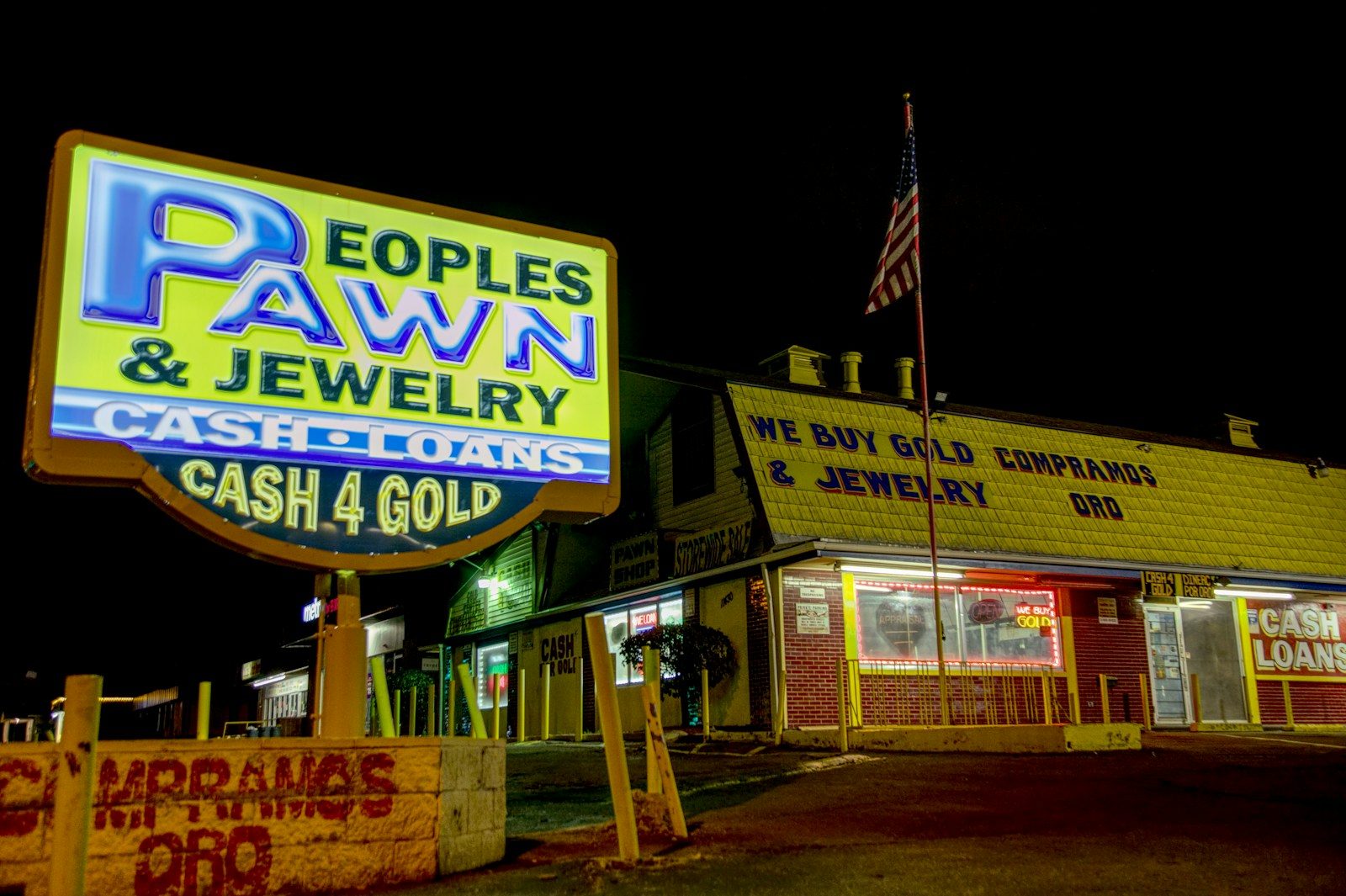
When money runs out before the month does, two options come up faster than almost anything else. Pawn shops and personal loans both put cash in your hand quickly. Both come with costs attached. The problem is that most people walk into one or the other without doing the math first, and the difference between a smart short-term decision and a costly mistake often comes down to a few numbers most people never stop to compare. This article breaks both options down so you can make the right call for your situation.
How Pawn Shop Loans Work
A pawn shop loan is a secured loan where you hand over a physical item as collateral in exchange for a cash amount that is a fraction of what that item is worth. Common items include jewelry, electronics, musical instruments, tools, and gaming equipment.
The pawn shop holds your item for a set loan period, typically 30 days, though some states allow longer terms. During that period you pay back the loan amount plus fees and interest to reclaim your item. If you do not pay back the loan by the deadline, the shop keeps your item and sells it. You owe nothing further but you lose the collateral permanently.
The fees on pawn loans vary by state because pawn shop regulations are set at the state level. Monthly interest rates commonly range from 10 to 25 percent, which translates to an annual percentage rate of 120 to 300 percent or higher. On a $200 pawn loan at 20 percent monthly interest, you would owe $240 at the end of 30 days just to get your item back.
The process requires no credit check, no income verification, and no application. You walk in with an item, get an offer, and walk out with cash, usually in under 15 minutes.
How Personal Loans Work
A personal loan is an unsecured loan issued by a bank, credit union, or online lender based on your creditworthiness. You receive a lump sum and repay it in fixed monthly installments over a set term, usually ranging from one to five years.
Interest rates on personal loans vary widely based on your credit score and the lender. Borrowers with good credit can access rates as low as 7 to 10 percent APR. Borrowers with poor or limited credit history often face rates between 25 and 36 percent APR through legitimate lenders. Some online lenders that specialize in bad credit personal loans charge rates approaching 36 percent, which is the cap many consumer advocates recommend as the upper limit of what constitutes a responsible loan.
Most personal loans take at least one to three business days to fund after approval. Some online lenders offer same-day or next-day funding. Credit unions often have more flexible underwriting standards than banks and are worth checking first, particularly if you are already a member.
The Real Cost Comparison
This is where the emergency cash cost comparison becomes clearest. Looking at a specific example helps.
Suppose you need $300 in an emergency and plan to pay it back within 30 days.
With a pawn shop loan at 20 percent monthly interest, you pay $60 in interest for one month. Your total repayment is $360. You also risk losing your collateral permanently if anything goes wrong before the deadline.
With a personal loan at 36 percent APR, your monthly interest on $300 works out to roughly $9 for one month. Even stretched over three months, the total interest paid is under $30. The personal loan costs significantly less in nearly every realistic short-term scenario when the rate stays below 36 percent APR.
The calculation flips only in one specific situation. If you have no credit history or a very low credit score and the only personal loan available to you carries triple-digit APR rates, a pawn loan on an item you were planning to replace anyway may cost less than a predatory personal loan over the same period.
When a Pawn Shop Makes More Sense
A pawn loan is worth considering when you need cash in under an hour and have an item of value you are willing to risk losing. It makes sense when your credit score makes legitimate personal loans inaccessible or extremely expensive. It is a reasonable option when you are confident you can repay the full amount within the loan period because the short-term cost stays contained.
It is the wrong choice when the item you are pawning has significant sentimental or practical value you cannot afford to lose. It is also the wrong choice when you are unsure whether you can repay within the term, because extensions typically add another full month of fees on top of what you already owe.
When a Personal Loan Makes More Sense
A personal loan is the better option in most situations where you qualify for a rate below 36 percent APR. It does not put any of your property at risk. It gives you a longer repayment window with predictable monthly payments. It also has the potential to build your credit history if the lender reports to the major credit bureaus, which pawn loans never do.
Credit unions are the first place worth checking for emergency personal loans. Many offer small-dollar emergency loan products specifically designed for members facing short-term cash needs. The National Credit Union Administration has a credit union locator on its website that helps you find one near you. Online lenders like Upstart and LendingClub also serve borrowers with limited or fair credit at rates that are often more reasonable than storefront alternatives.
What to Avoid in Either Category
Payday loans often come up in the same conversation as pawn shops and personal loans. They belong in a separate category entirely. Payday loans carry APRs that routinely exceed 300 to 400 percent and are structured in a way that traps many borrowers in a cycle of rolling over the same debt repeatedly. The Consumer Financial Protection Bureau has published extensive research on the debt cycle payday loans create and offers resources for borrowers already caught in one.
Rent-to-own arrangements are another option that sounds manageable but often costs far more than either a pawn loan or a personal loan over the full term of the agreement.
Other Options Worth Checking First
Before committing to either a pawn shop or a personal loan, a few alternatives are worth a quick check. Many utility companies, landlords, and medical providers offer payment plans or hardship deferrals that require no interest at all. Local nonprofit organizations and community action agencies sometimes have emergency cash assistance funds for basic needs. Calling 211 connects you with a specialist who can tell you in minutes what emergency assistance is available in your zip code right now.
Your employer may also offer paycheck advances or access to earned wage advance programs. Apps like DailyPay and Earnin let workers access wages they have already earned before payday, often with little or no interest, which beats both a pawn loan and a personal loan for anyone with a regular paycheck.





Leave a Reply